Friday, November 23, 2018

LAD/Blog #21: Emancipation Proclamation

In his Emancipation Proclamation, Lincoln decrees that all slaves present in any states or parts of states were declared free, including the army and navy, will "recognize and maintain the freedoms of such persons." Furthermore, he asserts that states who uphold the institution of slavery will be considered in rebellion with the United States. Lincoln names the southern states that are in considered rebellious, and again emphasizes that the slaves held in those states are to be immediately freed, and will be supported in their deservation of constitutional rights by the executive government and the military.

Image result for emancipation proclamation

Image result for 15th amendment

The Emancipation Proclamation reminds me of the 13th, 14th, and 15th amendments to the Constitution because all of these acts of legislation granted blacks more personal liberties.


LAD/Blog #20: Lincoln's 2nd Inaugural Address

Lincoln's 2nd Inaugural Speech was quite similar to first one, although it was significantly shorter in length. In his first inaugural address, Lincoln discussed the inevitable civil war and how it could result in severe disunity within the country. In his Second Inaugural Address, Lincoln discussed the continual uncooperative behavior of both sides and that they were unwilling to negotiate peace, so war was the only logical way to settle disputes. The Civil War was a battle resulting from sectional tensions within the U.S. that became a much bigger conflict than the North had expected. Lincoln emphasized his deep-rooted desire for eventual reconciliation of the Union in his second inaugural speech, and, in the process, become a stronger, more influential president.

Image result for lincoln second inaugural address

Image result for reagan's second inaugural address

Lincoln's Second Inaugural Address reminded me of that of Abraham Lincoln because both pushed for nationalism and national unity.

Friday, November 16, 2018

LAD/Blog #19: The Dred Scott Decision

At first, the Dred Scott vs. Sanford case was ruled in favor of Sanford.  However, the original decision did not factor in important details such as to the constitutionality of the Missouri Comprise, and other issues concerning racial discrimination. In his final ruling, Supreme Court Chief Justice Taney stated that real citizens of the U.S. (in this case slave owners) could not be deprived of life, liberty, or property anywhere in the U.S., including American territories. As slaves were not distinguished from other forms of property, and the Missouri Compromise deprived slave holding citizens of their "property", the Missouri Compromise was thus declared unconstitutional.


Image result for slave catching and returning

The Dred Scott vs. Sanford case reminded me about the Fugitive Slave Act of 1850 because both ensured that slaves were still considered to be property and inhuman.

LAD/Blog #18: Sojourner Truth's "Ain't I a Woman" speech

During the 1800's white women were treated with respect, as they were helped into carriages and carried over puddles.  Black women, on the other hand, were not offered any help.  They were treated just as poorly as men.  In her "Ain't I a Woman" speech, Sojourner Truth argues that, even if her intellect is less capable than a white's or a man's, as whites and men claim, doesn't she still deserve to be taught regardless? She ends by saying that all women should be treated equally, and that "the men better let them".


Image result for emma watson gives rousing speech on women's rights to the un

Sojourner Truth's speech reminded me of Emma Watson's speech at the United Nations because both pursued equality for women and equal rights.

LAD/Blog #17: Frederick Douglass' "5th of July" speech

Frederick Douglass begins by asking the people why they think he is giving a speech, and more importantly, the reason for him not celebrating independence day.  In short, he claimed  that African Americans were not being granted the rights urged in the detailed grievances of the Declaration of Independence in 1776, so he refused to observe the hypocritical holiday.  Despite the fact that some groups celebrated their copious liberties, others felt dehumanized as they did not enjoy those same freedoms.  In fact, the 4th of July served as a cruel reminder of black slaves' lack of rights at the time.  Until America gave African Americans their rights, it would remain a hypocritical and insulting celebration for many.


Image result for martin luther king jr

Frederick Douglass' speech reminded me of Martin Luther King Jr.'s "I have a dream" speech since both pushed for racial equality in America.

Wednesday, November 14, 2018

LAD/Blog #16: Lincoln's Gettysburg Address

Lincoln delivered a brief 272 word speech at Gettysburg. He said that America was built upon the notions of liberty and equality, and that the men who died at Gettysburg--in America's Civil War-- were fighting to preserve their great nation born of such virtuous and democratic ideals. His famous closing statement that the sacred American"government of the people, by the people, for the people shall not perish from the earth" signified his tireless desire to reunite the Union and to see the great country that he loved dearly thrive in future years. Overall, Lincoln's Gettysburg Address was a tribute to lost heroes in battle and a wonderful pledge of loyalty to national unity.


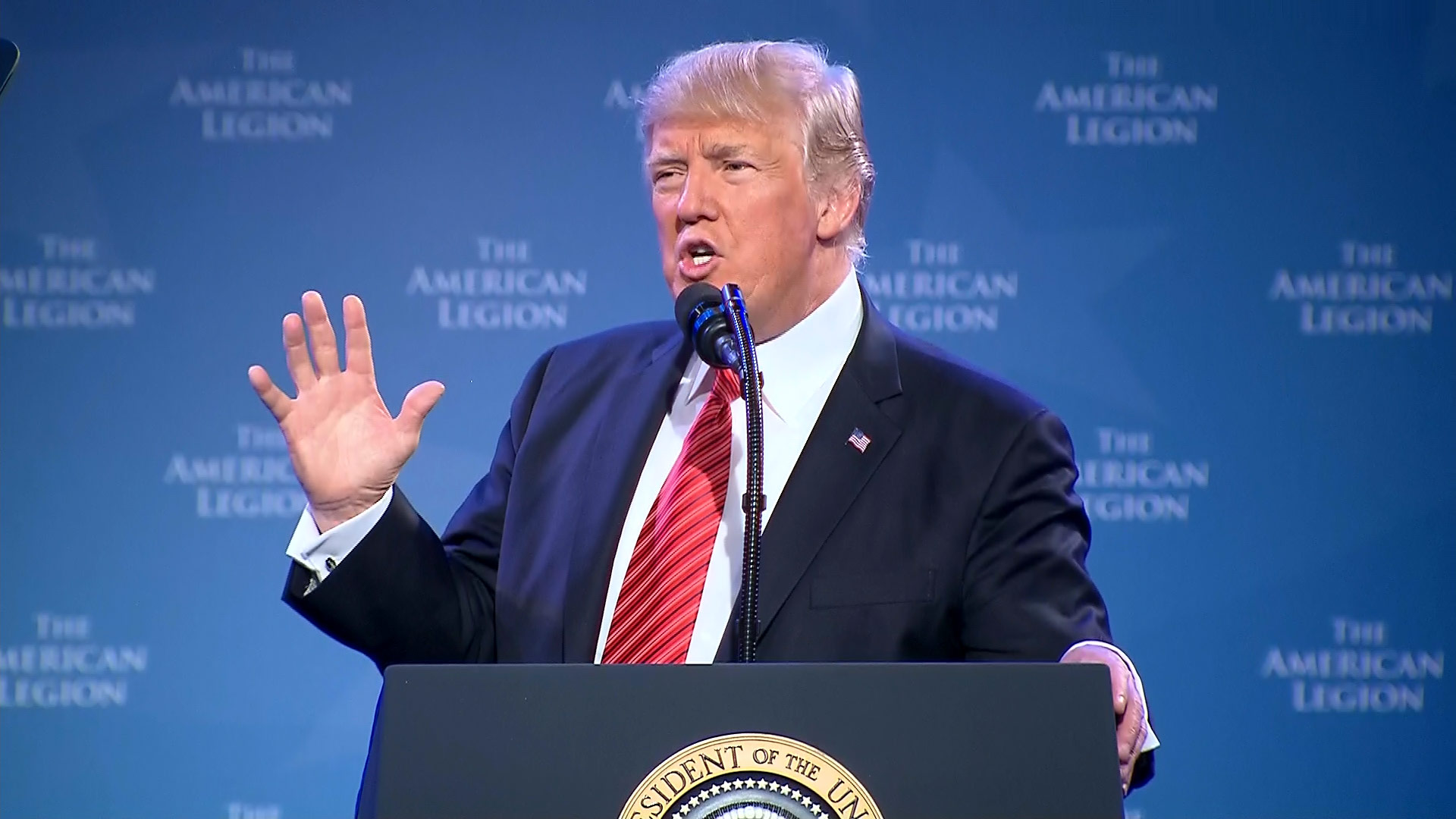
Image result for president trump unity speech reno nevada

Abraham Lincoln's Gettysburg Address reminded me of Donald Trump's speech on August 23, 2017 in Reno, Nevada because both were brief speeches that stressed a desire for national unity.

Sunday, November 11, 2018

LAD/Blog #15: Lincoln's First Inaugural Address

Lincoln opens his First Inaugural Address by assuring the southern states that their "peace and personal security" will not be infringed upon, as he promises leave slavery alone where it already exists. Lincoln expresses his strong belief that the States have a right written in the Constitution to control their own institutions, and says that he will honor that power. Next, he asserts the dominance of federal law over state law in order to keep the country unified under the Constitution and declares secession from the Union an act of revolution. Lincoln concludes his address by stating that the government belongs entirely to the people it serves and that the people have a right to amend it. In other words, he pushes for nationalism, unity, and cooperation in hopes that the country will become more united and productive as it once was. Lincoln's final words of this great speech re-emphasize his dedication to reunification. He says "We are not enemies, but friends," reiterating a need to dissolve bitterness and preserve the Union.

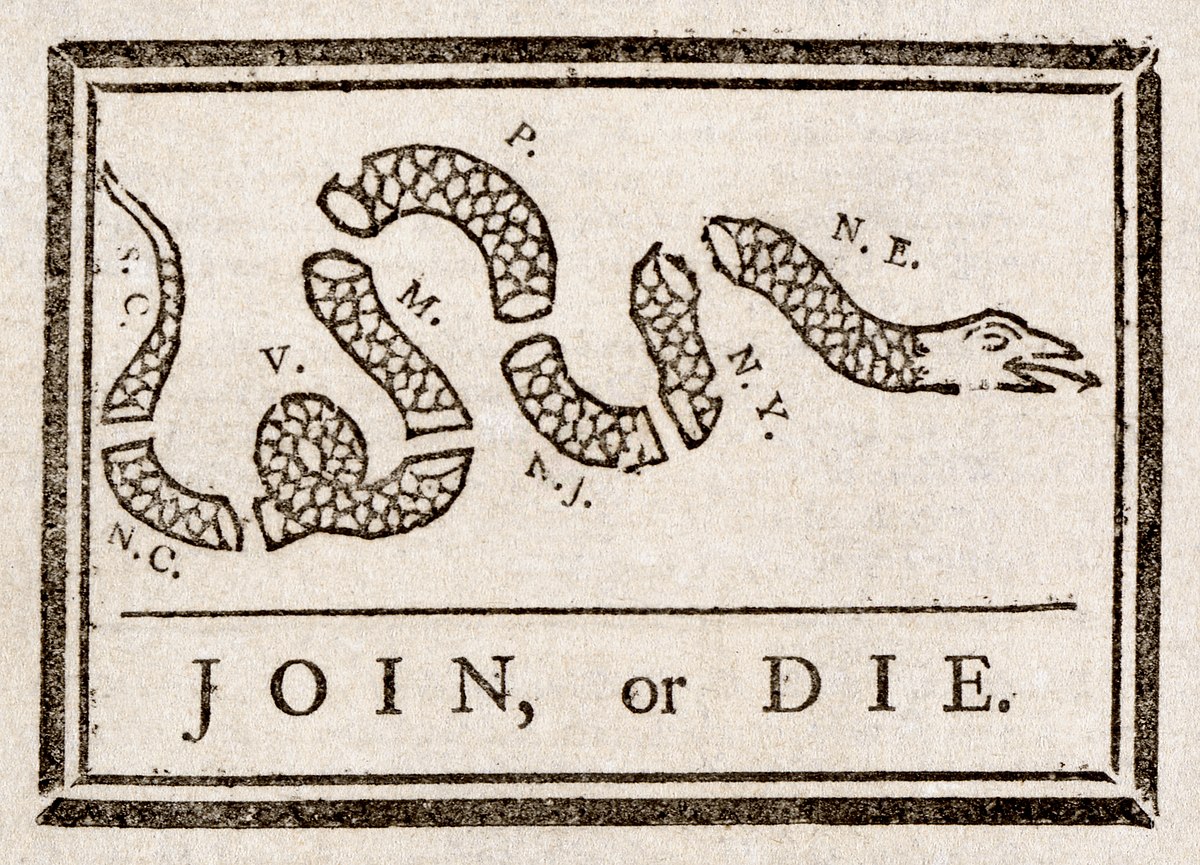

Image result for join or die cartoon

Lincoln's First Inaugural Address is similar to the Join or Die cartoon created by Benjamin Franklin in 1754 because both emphasized a need for Unity in America.