Sunday, October 28, 2018

LAD/Blog #11: Monroe Doctrine

Summarize the Monroe Doctrine:

One of the key points of the Monroe Doctrine was that it expressed America's solidarity as a nation and its stricter policy towards colonizers of North America. It stated that any attempt to colonize North America would be seen as an act of violence and would be met with military force. This assertion was meant to let other foreign powers know that the U.S. was no longer a weak power. Another concept addressed in the doctrine was that America would not be involved in any internal affairs between European powers so as to maintain foreign neutrality. This was one of the main purposes of Secretary of State Adam's writing the doctrine because he believed that America needed time to rebuild and repair their nation following the War of 1812, so avoiding further warfare was crucial. Moreover, the Monroe Doctrine is often referred to as "the cornerstone of American foreign policy" because it expressed the still prevalent ideas of neutrality in American government. The document recognized that America would not interfere with any existing colonies in North America or any established countries across the globe. This ensured that the United States would remain impartial in the realm of foreign affairs, ultimately helping to prevent war.


Image result for neutrality acts

The Monroe Doctrine reminded me of the Neutrality Acts passed in 1935, 1936, 1937, and 1939 because both attempted to establish U.S. global neutrality and to limit U.S. involvement in future wars.

Saturday, October 13, 2018

LAD/Blog #10: Jefferson's First Inaugural Address

Summary of Jefferson's First Inaugural Address:

     Thomas Jefferson opened his first inaugural address by expressing his gratitude and honor to hold such an important position in the country that he had dedicated his life to helping to create. Later on in the speech, Jefferson encourages the strength of the constitution and urges the people to respect the document for protecting the rights of all citizens. He ensures that he will defend the constitution to the best of his ability during his presidency, but will also rely heavily on the support of the people and his administration to effectively lead the country. One of the most important aspects of Jefferson's address was the motivation for unification, despite the current state of divide between political parties. Furthermore, he acknowledges that his presidency will not be perfect, but he will do everything in his power to lead for the common good of the country. Jefferson pledges to dedicate the next four years of his life to serving his country and even makes the humble assurance that he will listen to the people and will even step down from his role if they deem it necessary, illustrating his whole-hearted belief in popular sovereignty.


Image result for obama inauguration speech

Jefferson's inauguration speech reminded me of that of President Obama's because both addressed the importance of national unity and dedication to serving the country as a whole.

Saturday, October 6, 2018

Blog #9: Was Columbus a Hero or a Villain?

     While it is true that Christopher Columbus possessed both positive and negative traits, the latter far outweighs the former. Despite the fact that he is remembered most commonly throughout the U.S. as a hero, he should instead be remembered as a villain for the horrible crimes he committed against the Native American populations that he encountered in the Caribbean islands. First of all, throughout many of his writings created during his time in the Caribbean, Columbus expressed extremely ethnocentric and xenophobic views towards the natives. As a result, Columbus was very involved in the slave trading of natives and even auctioned girls as young as 9 years old into sexual slavery. "Let us in the name of the Holy Trinity go on sending all the slaves that can be sold." In fact, in 1499, word of some of his heinous actions was brought to the King and Queen of Spain and he was arrested by the Spanish government later that year and removed from position of governor in Hispaniola. As is evident, Christopher Columbus was a ruthless man with vile intentions for Indian populations. Clearly, he was not the heroic figure that many proclaim him to be.


Image result for ben franklin

Christopher Columbus reminded me very much of Benjamin Franklin because both are widely remembered as heroes but have a great deal of controversy surrounding their historic virtue.

Tuesday, September 25, 2018

LAD/Blog #8: Washington's Farewell Address

Summarize the Address and pick out 3 of his biggest warnings:

Summary:

Washington first tells the country that he is voluntarily removing himself from the running for the next presidency. He wishes the next president to be a virtuous and competent man who will do good for the common good, and he shows a deferential sense of gratitude for the nation that he spent so much of his life serving. Although he looks forward to his retirement, Washington hopes to always help his country to grow and become even more successful, so he presents an array of parting advice so that his predecessors can learn from his experiences.

1. Washington tells the public to always remember the crucial role that unified government plays in protecting civil liberties and the unalienable rights of the common man, because, when the public attempts to tamper with and degrade these laws, they could actually be hurting themselves.

2. Washington alludes to the dangers of competitive parties, as they can lead to hatred, bitterness, and, in some cases, oppression.

3. Public opinion and diversity of thought are sources of strength, but should be used sparingly, in respect to factions.


Image result for president obama farewell address

President Barack Obama and his recent Farewell Address reminded me of that of George Washington because both addressed the state of the union and gave advice as to how to better the country.

LAD/Blog #7: Washington's Proclamation of Neutrality

Briefly Summarize Washington's Proclamation of Neutrality:

Washington asserted the idea of impartial foreign policy in his Proclamation of Neutrality in 1793. The U.S. had a weak, inexperienced military, and Washington believed that it would be foolish to engage in warfare while trying to establish a lasting republican democracy. In addition, he proclaims that America will not protect any citizens who don't abide by these policies and any who break the law will be prosecuted accordingly.


Image result for non-alignment movement

The Proclamation of Neutrality reminded me of the non-aligned movement during the cold war, as both shared the concept of impartial foreign policy.

Monday, September 24, 2018

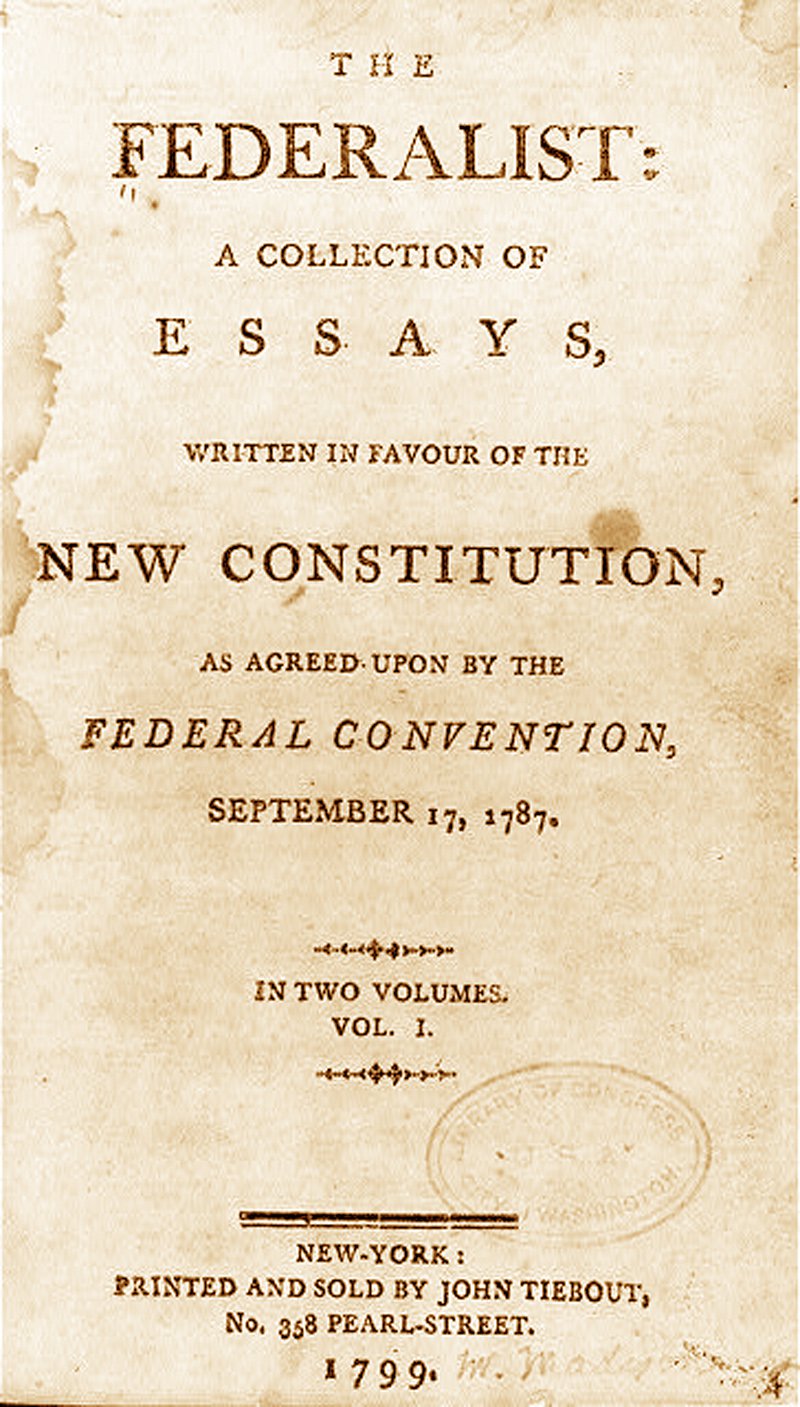
LAD/Blog #6: Federalist Paper #10

1.  What is a faction?

A faction is a group in government of individuals who share a common political purpose.

2.  Are factions good or bad?

Factions are beneficial to government because they help to raise support for a group and their ideologies while restricting the ability for any one person or group to completely dominate a political scene.

3.  Why are factions so difficult to eliminate?

Factions are so difficult to eliminate because, by nature, humans are social and group-oriented, and tend to congregate in numbers where they can find strength and unity. In order to remove factions, the liberties of the people to express their beliefs among one another must be infringed upon.

4.  If factions cannot be removed then how can they be controlled?

Factions only need to be controlled when they are in the majority, since, under the constitution, it is impossible for a minority faction to obtain political power (as they would always get outvoted by the majority faction). If a faction is in the majority though, it can be controlled by a republic. The representative nature and election processes of the U.S. Constitution act as checks and balances for majority factions. Because of the size of the country and its diversity, it is extremely hard to simultaneously build national support for factitious beliefs across a majority of the states.

Image result for federalist 10 original

Image result for rep and dem logos

The topic of factions reminded me of the bipartisan divisiveness that American is experiencing in present day.

Sunday, September 23, 2018

LAD/Blog #5: Republican Motherhood

1.      What role did the Revolutionary War play in the transformation of housewifery to Republican Motherhood?

After the Revolutionary War, the enthusiasm for enlightenment ideals that Americans had fought for, like liberty, republicanism, and independence were idolized. As a result, the people of the newly established country wished to instill those ideals into the youth of society so as to continue the development of the country. In doing so, republican mothers adopted the important responsibility of engendering such virtues into their sons. (Document A).

2. What were the consequences of Republican Motherhood on women?

The results of Republican Motherhood were that women were encouraged to get an education. Since mothers during that time were given the crucial responsibility of raising sons with adequate mindsets, women were often put through school in order to increase their maternal capabilities. Women were also praised for their important contributions to the betterment of the nation which, in turn, earned them a higher level of respect in society than had previously been known. (Document B).

3. What is the significance of the ideology of Republican Motherhood as a stage in the process of women’s socialization?

Republican Motherhood gave women an increased level of authority in society. Their role as the care takers and backbone of society also gave women more confidence and pride in themselves that they truly had control over the destiny of the country (Document C). All of these advancements were a step in the right direction for women and social equality.


1. Describe the setting.

A young mother is sitting on a sofa with her two sons on either side of her. Her sons are clad in peculiarly feminine attire.

2. Who serves at the center of the portrait and why?  How does the woman look?  How is she “republican” rather than aristocratic?

The Woman, Mery Gibson Tilghman, is the center of the portrait. She is illustrated as the assertive and dominant figure in the picture, while wearing average value clothing, reflecting her status as a republican, and not aristocratic, woman. She also appears young and attractive, but has a very modest and reserved look, starkly contrasting that of a typically extravagantly dressed upper-class woman.

3. What values do her sons exhibit?

Her sons portray symbolically the influence of republican motherhood on society, as they are depicted wearing womanly clothing.

4. Is there a significance to the position of Mrs. Tilgham’s arm?

The placement of Mrs. Tilghman's arm around one son exclusively could signify favoritism of one son over the other. More specifically, she could be exhibiting the long standing practice of primogeniture, where the eldest son is heavily favored and receives all inheritance of their parents possessions.

Image result for 19th amendment to the constitution

The advances made by the ideology of Republican Motherhood for women in society reminded me of the 19th amendment which gave women the right to vote.